
- LicensedTexas Master Plumber 40980
- On call 24/7Licensed plumbers for emergencies
- Brazos ValleyCollege Station, Bryan and nearby
4L Contracting LLC uses acoustic listening, pressure isolation and thermal reading to find where a pressurized line is losing water before anyone opens concrete. Plumbing service in Bryan, TX from a licensed master plumber. Diagnosis first, price in writing.
Call 979-473-9775Request Service
Office hours Monday to Friday, 7 AM to 5 PM. Licensed plumbers on call 24/7 for plumbing emergencies. Texas Master Plumber License 40980
Why Brazos Valley Soil Moves a Slab
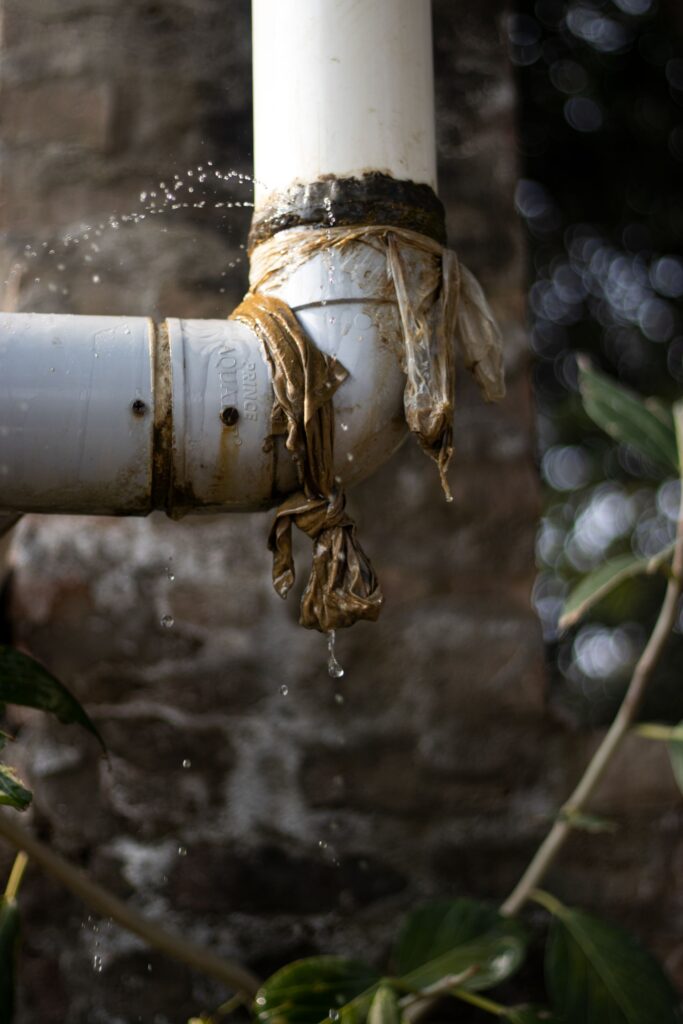
The heavy clay that underlies most of Brazos County swells when it absorbs water and contracts when it dries out. A concrete slab poured on top of that soil moves with it. It rises a fraction in a wet spring and settles back in a dry summer. The slab itself may tolerate the cycle for decades. The pipes cast into it or run beneath it are less forgiving.
A rigid line takes the strain at its weakest point. Usually a joint, a fitting, or a stretch of pipe that corrosion has already thinned. Cast iron drain lines that have been in the ground for thirty or forty years develop hairline fractures at the bell joints first. Copper supply lines fail at solder points. They also fail where the copper has been in contact with the concrete long enough to pit from the inside. Galvanized supply lines corrode from within and eventually open a pinhole where the wall is thinnest.
Bryan sits on the same geological formation that makes slab leaks a common job across the whole region. The wider service page for slab leak detection describes the soil mechanics in more detail. What differs in Bryan is the age spread of the housing stock. That determines which pipe material is likely to be under any given slab.
Older Bryan Neighborhoods and What Is Under the Concrete
Bryan is the county seat of Brazos County and the older of the two cities that make up the Bryan and College Station metro. The city grew across many decades. So the pipe material under a Bryan slab depends far more on when the house was built than on which street it sits on. That matters when choosing a detection method and when evaluating repair options.
Pre-1970s Downtown Bryan and surrounding areas
Cast iron drain lines, galvanized steel supply lines
The oldest housing stock in Brazos County sits in and around downtown Bryan. Cast iron drain lines in these homes have been in the ground a long time. Long enough for the bell joints to corrode, and for the pipe wall to thin from sulfide exposure. Galvanized supply lines from this era carry mineral buildup that restricts flow and eventually opens pinholes from the inside out.
1970s through 1980s Bryan neighborhoods
Copper supply lines, cast iron or early ABS drain lines
Copper replaced galvanized in most Bryan tract construction during this period. Copper holds up well in most conditions, but the hard regional groundwater leaves scale on the interior wall and accelerates corrosion at soldered fittings. A copper line under a slab in a Bryan home from this era is not at the end of its life. But a failed fitting is not unusual.
1990s through early 2000s subdivisions
Copper or early PEX supply lines, PVC drain lines
Newer Bryan neighborhoods on the north and west sides of the city were built during the transition from copper to PEX supply lines. The year the house was built matters more than the street address for predicting what is under the slab. PVC drain lines from this period are generally sound. PEX supply lines have a long service life and do not corrode.
Outside the Bryan city limits, a large share of Brazos County properties use septic systems and well water. They are not on City of Bryan utility service. Hard groundwater is a regional constant on both city water and well water. It shortens fixture life and accelerates scale buildup inside supply lines, whatever the pipe material.
What our customers say
Published exactly as written, straight from Google.
Found late Friday evening that I did not have hot water, and it was the weekend... YIKES!! Contacted 4L Contracting LLC; they came out within a couple of hours and had me working in a short time. Lee went above and beyond, letting me know about other problems identified in my attic, a problem with my chimney, and a heating vent installation problem. After he left, I found a water leak in the laundry room ceiling. He turned around and came back to my house. He found the air conditioning drain pipe was backed up. He blew it out the drain pipe, preventing a big disaster. So appreciate his thoroughness and helping me on a Friday after-hours house call. He definitely went above and beyond.
I had a great experience working with 4L Contracting LLC. They were awesome to work with, they were professional, responsive, and clearly knew what they were doing. We had a massive leak that needed immediate attention, and they showed up quickly and handled it efficiently. They not only fixed the issue fast but also made sure everything was done right. I would absolutely recommend them to anyone needing reliable, high quality work!
Used 4L Contracting the first time a couple years ago and since then they have replaced a water heater, reset toilets, replaced water lines, and located and fixed a leak under the house! They have been amazing to work with over the years, I cannot recommend these guys enough!
Water Softener installation Completed! Just wanted to give a shout out to Kurt and Lane on their outstanding customer service today. I hired 4L Contracting LLC to install a water softener in our home. After finding out the water softener I had purchased was missing parts, the job was rescheduled for Monday. I was able to return the water softener and get a replacement fairly quick. So I sent a text to Kurt, letting him know I had done so. He informed me they were nearby and could do the job in about 30 minutes if I could meet them back at my home. I hurried home and in about 2 hours the job was completed. Tonight my wife and I shall enjoy a soft water shower!
My husband and I had a broken pipe in the foundation and it was leaking pretty bad into our hallway, and 4L Contracting came that day we called, assessed the issue, and was back the next day and completely fixed the problem. They were so nice and helpful! I cannot tell you how pleased we were with their service. I recommend 4L Contracting!
My wife and I discovered a water leak coming out of our wall. 4L Contracting LLC came out that day and found where the leak was coming from (copper pipe leaking in the slab), they started working immediately and finished the next day.
These plumbers are honest, knowledgeable and reliable! They helped us fix a leak and answered all our questions about other issues in the house. Highly recommend!
Lee and his guys are Great. Their communication on our projects have been superb! Always letting us know when they will be at the job site. Lee is doing 3 projects for our Airbnb's at one time, and his organization of his paperwork is paramount for us.
WHAT IT COSTS AND HOW YOU PAY
Price in Writing Before Work Starts
You get a written price covering the scope we recommend and what it includes. No verbal estimates. No extra charges added after the fact. You approve the scope and cost before we start.
Workmanship Warranty
Every installation we perform is backed by a workmanship warranty. If a problem with our work develops within the warranty period, we return and fix it at no charge to you.
Office Hours and Emergency Availability
Office hours Monday to Friday, 7 AM to 5 PM. Licensed plumbers on call 24/7 for plumbing emergencies. Reach us at 979-473-9775.
How a Slab Leak Shows Itself in a Bryan Home
These signs tend to appear in the order a homeowner actually notices them. One of them alone is not always conclusive, but two or more together are a strong case for an isolation test.
A water bill that steps up without a change in habits
The meter is recording water that never reached a fixture. Your bill may climb one month and keep climbing the next, with no new appliance and no change in the household. That increase is going somewhere inside or under your slab.
A warm spot on a floor
Hot supply lines run under or through the slab in most Bryan homes built before the mid-1990s. A soft warm patch on tile or wood flooring is one of the clearest physical signs of a hot-line leak. That is especially true in an area with no underfloor radiant heat.
Running water with every fixture closed
Turn off every faucet, the dishwasher, the washing machine and the ice maker. Then stand still and listen near the floor. A faint hiss or a low rumble when nothing should be running is water moving under pressure where it should not be.
A hairline crack that appears or widens
Settlement cracks in a slab are common and not always structural. But some cracks are worth isolating before you assume they are cosmetic. One that appears near a plumbing wall and lengthens over a few months, especially alongside soft or damp flooring.
A door that stops latching
Soil saturated by a slow leak swells unevenly under the slab. The frame shifts, the door no longer lines up with the strike plate. A door that latched fine six months ago now sticks or gaps along the top. It is one of the subtler signs a Bryan homeowner sometimes notices first.
A meter that creeps with every fixture shut
Locate your meter box and watch the low-flow indicator, the small triangle or dial on the face of most City of Bryan meters. Close the main valve to the house, then watch the indicator for two minutes. Movement with everything shut means water is moving on the supply side.
Finding the Leak Without Opening the Whole Slab
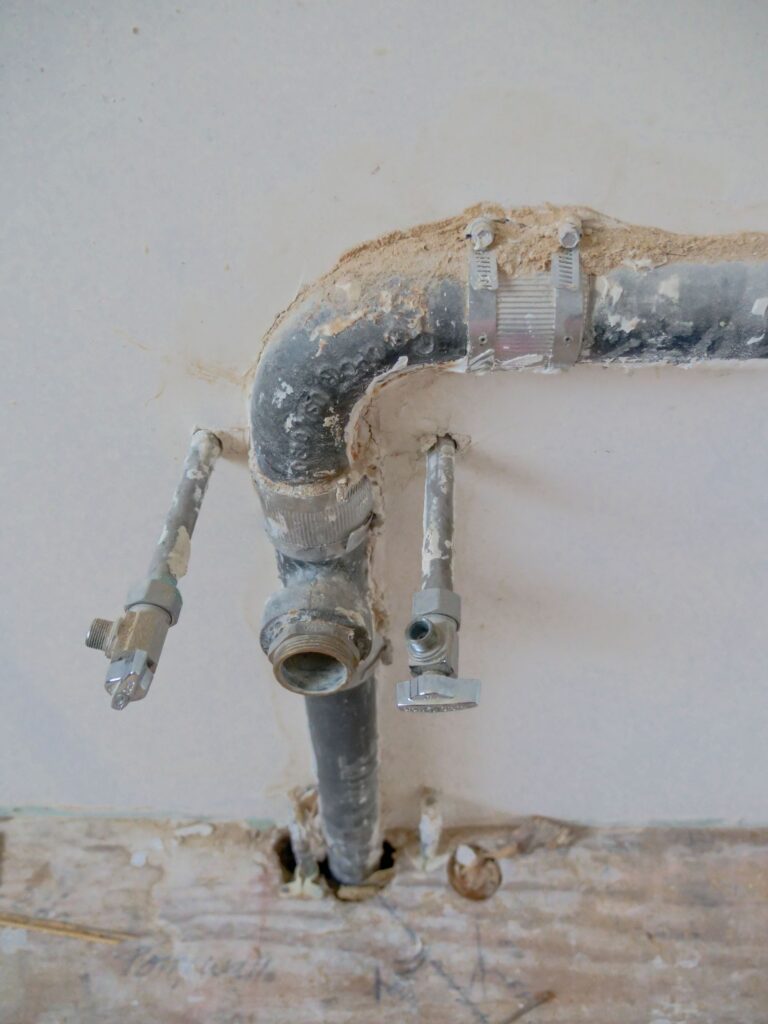
The goal before any concrete work is to narrow the location as far as the equipment allows. Each method below reduces the search area rather than placing an exact mark on the floor. Being honest about that is how we avoid opening three spots when one would have done.
Pressure isolation testing
We isolate the hot and cold supply lines separately, at a hose bib or at the water heater shutoffs. Then we hold each side under pressure. A line that holds tells us the leak is not there. A line that drops pressure tells us where to look next. This is the first step because it is fast and it costs nothing to destroy.
Acoustic listening
Once pressure testing has narrowed the leak to a specific line, we use electronic acoustic equipment on the floor surface above the suspected run. Pressurized water escaping through a small opening creates a frequency that carries through concrete. The equipment narrows the area, though it does not mark a single inch.
Line tracing
We use a signal transmitter and receiver to trace the exact route of the buried line. Bryan homes built in different decades laid out their supply runs differently. Knowing exactly where the line runs is worth the time it takes, before anyone swings a demo hammer.
Thermal reading of the floor
For a hot-line leak, a thermal camera shows the heat signature of water spreading beneath the slab surface. It confirms the area indicated by acoustic testing and helps us choose the smallest possible opening. Cold-line leaks do not show a thermal contrast in warm Texas weather. So thermal reading is one tool in the kit, not the whole kit.
The isolation logic also tells us which side of the system is leaking before any tool touches the floor. Proving the leak is on the pressurized supply side rather than the drain side changes the repair path entirely. A drain leak does not register on a supply-side pressure test, and a supply leak does not show up in a drain camera. Getting that question right first saves time on the diagnosis and money on the repair.
Repair, Reroute or Repipe: How That Choice Gets Made
After detection we tell you which of three paths makes sense for your specific system and why. The right choice depends on the pipe material, the location of the leak and the condition of the surrounding run. We give you the reasoning in plain language and the price in writing for each option before any concrete moves. Where opening the floor is not the right answer, we can tunnel in from outside instead.
Spot repair through a small opening
When the rest of the system is sound
Detection may place the leak at a single fitting, or a short section of otherwise sound pipe. Then a targeted repair through a small floor opening is the right answer. We remove the minimum concrete needed to reach the line, make the repair, and pressure-test the section. Closing the concrete back up is separate work that we can arrange for you. This works best when the pipe material on both sides of the leak is still in good condition.
Reroute overhead or through a wall
When the line is buried under a difficult spot to reach
Some supply line runs pass under load-bearing points. Some sit beneath finished tile a homeowner wants to preserve. Some are in spots where the concrete is thick and cutting is expensive. In those cases we abandon the buried run and reroute the line overhead, through a wall or through the attic. That is often cleaner and less costly than opening the floor. The buried line stays in place and is capped. The new run is accessible for any future service.
Whole-home repipe
When the pipe material itself has reached end of life
Detection may find one active leak while the surrounding pipe is the same age, material and condition. Repairing the one leak then often precedes a second failure by six to eighteen months. When the diagnosis shows that the problem is the material rather than a single spot, a full repipe with modern materials stops the cycle. See our whole-home repiping page for how that process works, what materials we use and what it includes.
Not sure where to start?
Talk to a licensed plumber
Describe what your plumbing is doing and we will tell you what it likely is before anyone comes out.
What the Diagnosis Includes and What It Does Not
We do not quote repairs by phone and we do not give price ranges before we see the system. Visit the plumbing prices page for a full explanation of how our estimate process works. Here is what the detection appointment covers.
Included in the detection visit
- Pressure isolation test on the hot and cold supply sides
- Acoustic listening with electronic detection equipment
- Line tracing to confirm the buried run location
- Thermal floor scan on hot-line cases
- Written report of findings before repair work is quoted
- A clear explanation of which pipe side the leak is on
- Repair path recommendation with reasoning
Not included in the detection visit
- Demolition or concrete cutting before the written repair quote is accepted
- Repairs to drain-side failures identified during the inspection
- Floor restoration or cosmetic repairs after concrete work
- Camera inspection of sewer lines (separate service, see drain and sewer pages)
No repair work starts without your approval of a written price. Scheduling is confirmed when the job is booked. Office hours Monday to Friday, 7 AM to 5 PM. Licensed plumbers on call 24/7 for plumbing emergencies.
Licensed, Insured and Local
Before you hand anyone access to your slab, here is what you can verify about 4L Contracting LLC.
Texas Master Plumber License 40980
4L Contracting LLC holds Texas Master Plumber License 40980 issued by the Texas State Board of Plumbing Examiners. You can verify any Texas plumbing license at tsbpe.texas.gov .
General Liability Insurance
We carry general liability insurance on every job. If something unexpected happens on your property during the detection or repair, you are not left holding the bill.
Serving the Brazos Valley Since May 2021
4L Contracting LLC has been serving College Station, Bryan, and the surrounding counties since May 2021. Bryan slab leak work is part of our regular job log, not a specialty we pick up once a year.
Diagnosis First, Price in Writing
We do not quote slab leak repair by phone. Every job starts with a proper detection visit, a clear report of what we found, and a written price before anything is approved or opened.
SLAB LEAK DETECTION BRYAN NEAR YOU
We work across College Station, Bryan and the towns around them. Pick your town, or check whether we cover your area.
Slab Leak Detection in Bryan TX. Call or Request Service.
Office hours Monday to Friday, 7 AM to 5 PM. Licensed plumbers on call 24/7 for plumbing emergencies. Scheduling is confirmed when the job is booked.
Call 979-473-9775Request Service
Not the job you have? See all plumbing services, or call 979-473-9775 and describe what you are seeing.
Common questions
Is this something you really do in Bryan, or do you subcontract the leak locating out?
We do it ourselves, with our own equipment, working under Texas Master Plumber License 40980. Bryan is a short drive from our base in College Station and slab work here is part of the regular job log. The person who listens to your floor is the person who explains the findings and prices the repair, which matters, because the reasoning behind where we mark the floor should not reach you second hand.
Do you charge to come out and look, and can you tell me over the phone what it will cost?
No, we do not price slab leak work by phone, and anyone who does is guessing. Until the hot and cold sides have been isolated and tested nobody knows which line is losing water, or whether the loss is even on the pressurized side. What applies to the visit is explained when you book, before we drive out. After the diagnosis you get findings in writing and a price for each repair option. Call 979-473-9775.
How quickly can you come, and is a slab leak an after hours job?
Office hours Monday to Friday, 7 AM to 5 PM. Licensed plumbers on call 24/7 for plumbing emergencies. Most slab leaks are not an overnight emergency. They are a slow loss that has been running for weeks, and locating one needs a quiet house and daylight to do properly. If water is actually surfacing through the floor, backing up, or running where it can reach electrics, that is different, shut the main off and call 979-473-9775.
Do I have to be home, and does the house need to be empty and quiet?
Someone needs to let us in, and yes, the house genuinely has to be quiet for the acoustic stage. We will ask you to switch off the HVAC, the ice maker and anything else that hums, and to keep pets and kids out of the room we are listening in. A running air handler masks a small leak completely. It is a short window of quiet, not the whole visit, and we tell you when it is over.
What happens if you test it and nothing is leaking under the slab?
Then we tell you that, and we do not open anything. A pressure test that holds flat proves the pressurized side is not losing water, which sends us looking elsewhere: a running toilet flapper, an irrigation valve, a sweating line, a shower pan, or a drain side failure that a supply test will never show. Ruling the slab out is a real result. It is the answer that saves you a hole in your floor.
Should I turn my water off while I am waiting for you?
If the meter is spinning hard and you can live without water, shutting the main slows the damage and the bill. If the loss is slow and you need the house running, leave it on and note the meter reading morning and night so you have a rate to show us. Either way, keep hot water demand low. A hot line leak that is heating the soil under a slab does more harm the longer it runs.
Will my homeowners insurance pay for this?
That is between you and your insurer and we will not tell you what your policy does. What we can say is that many Texas policies treat the sudden water damage differently from the pipe repair itself, and that adjusters ask for specifics. So we give you written findings: which side of the system failed, how it was confirmed, where it was located and what the repair involved. Send that to your adjuster. Call your carrier before you authorize repair work.
If you repair it, is the repair guaranteed?
Repair work carries our workmanship warranty, covering the joint we made and the section we replaced. What it cannot cover is the rest of a pipe run we did not touch. If your house has original copper of the same age and condition throughout, fixing one pinhole does not make the next one less likely, and we will say so at the time rather than after. That is when a reroute or a whole home repipe is worth discussing.
Have a plumbing question? Contact an expert.